Demand was never the problem.
Every lost-and-found platform I looked at failed on the same thing: too few people reporting what they had found.
Early-stage startup · Product manager · Team of 8
What's yours, found
The live product site: scroll inside. Open in a new tab ↗
Problem statement
Frequent public transit commuters struggle to get lost belongings back, because finders have no easy way or reason to report what they find. Recovery depends on whoever happens to be holding the item, and the owner has no way to reach them.
Kittii is an AI-powered lost-and-found marketplace. Seekers report what they lost, a community of finders called Sherlocks report what they found, and AI matching pairs the two.
Highlights
What I owned
As a co-founder, I translated our core vision into a rigorous product roadmap, leading an 8-person cross-functional team spanning engineering, UI/UX design, and marketing to bring Kittii from concept to high-fidelity MVP.
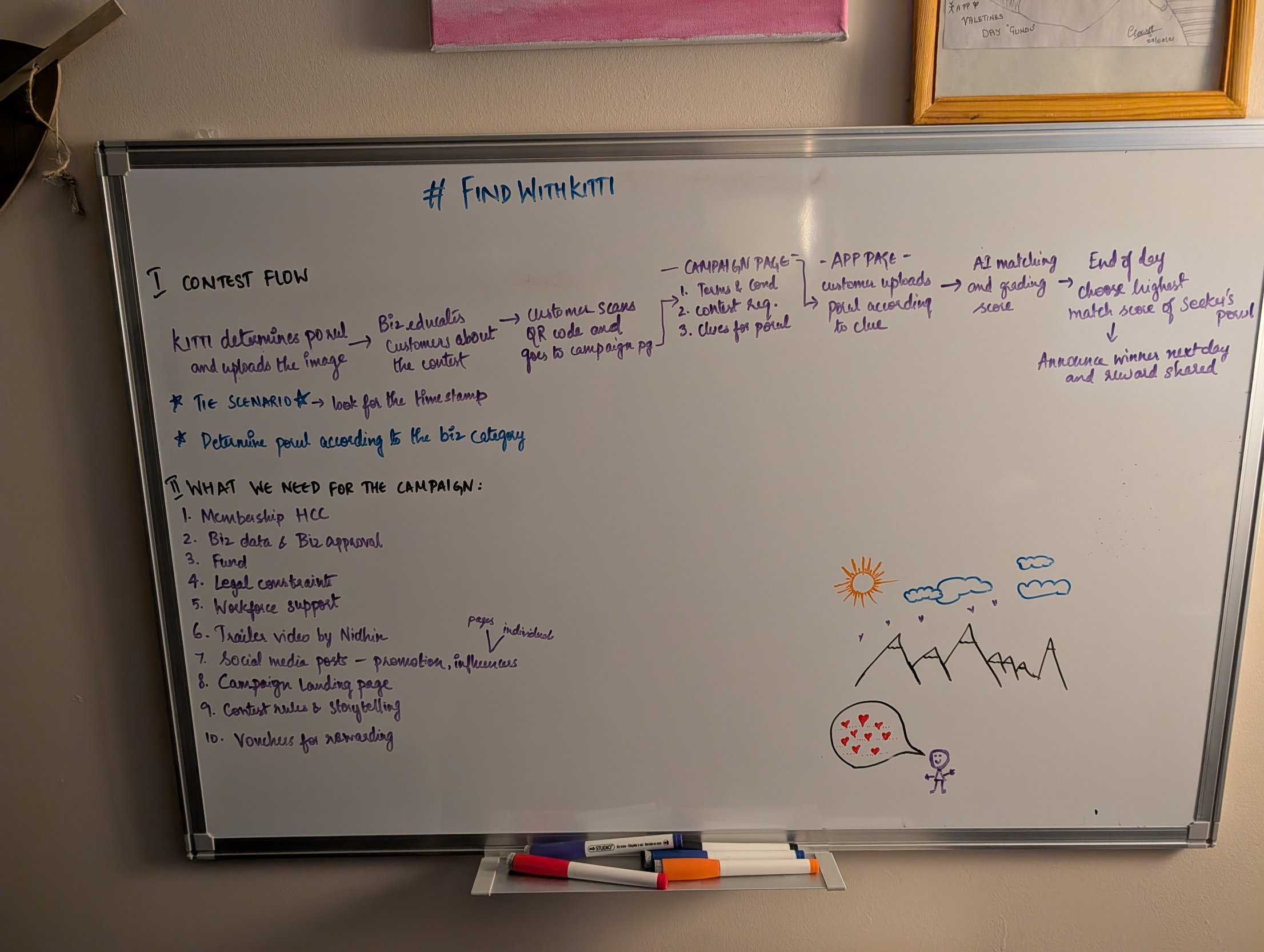
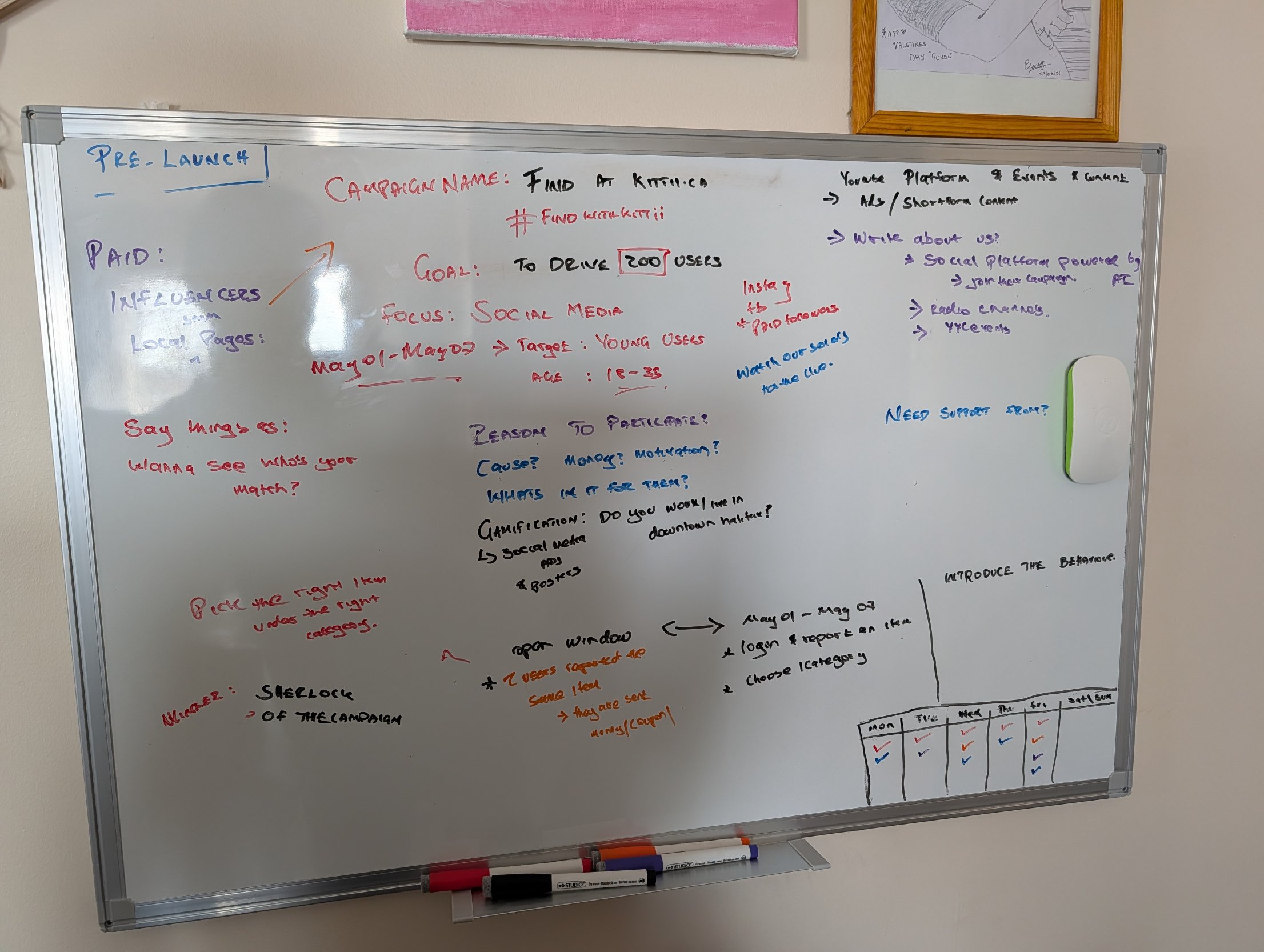
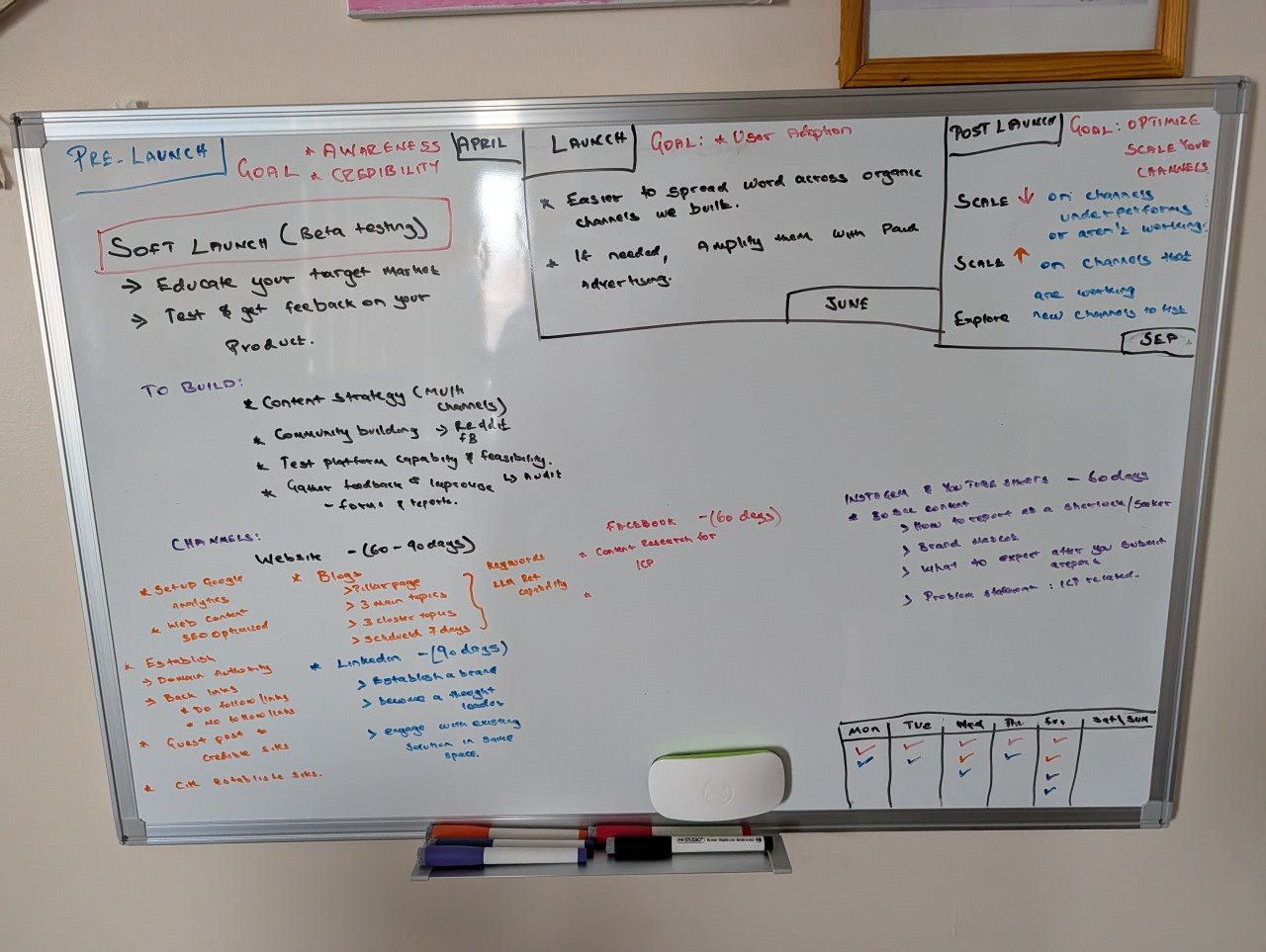
Planning sessions for the go-to-market strategy. The contest flow became #foundatkittii, the pre-launch campaign set the 200-user acquisition target, and the three-phase plan mapped channel assignments across launch week.
Kittii began with friends from my post-graduate programme at Cape Breton University. The founder brought the idea to two of us, and it had already been put in front of Volta, the Atlantic Canada startup house, reaching the second round without getting through.
The feedback was that the idea was promising but the fundamentals were missing. That set the work for the next stage: do the discovery properly before building anything.
The target segment was frequent public transit commuters. For them, recovery today is informal and slow: it depends entirely on whoever happens to be holding the item, and the person who lost it has no way to reach them.
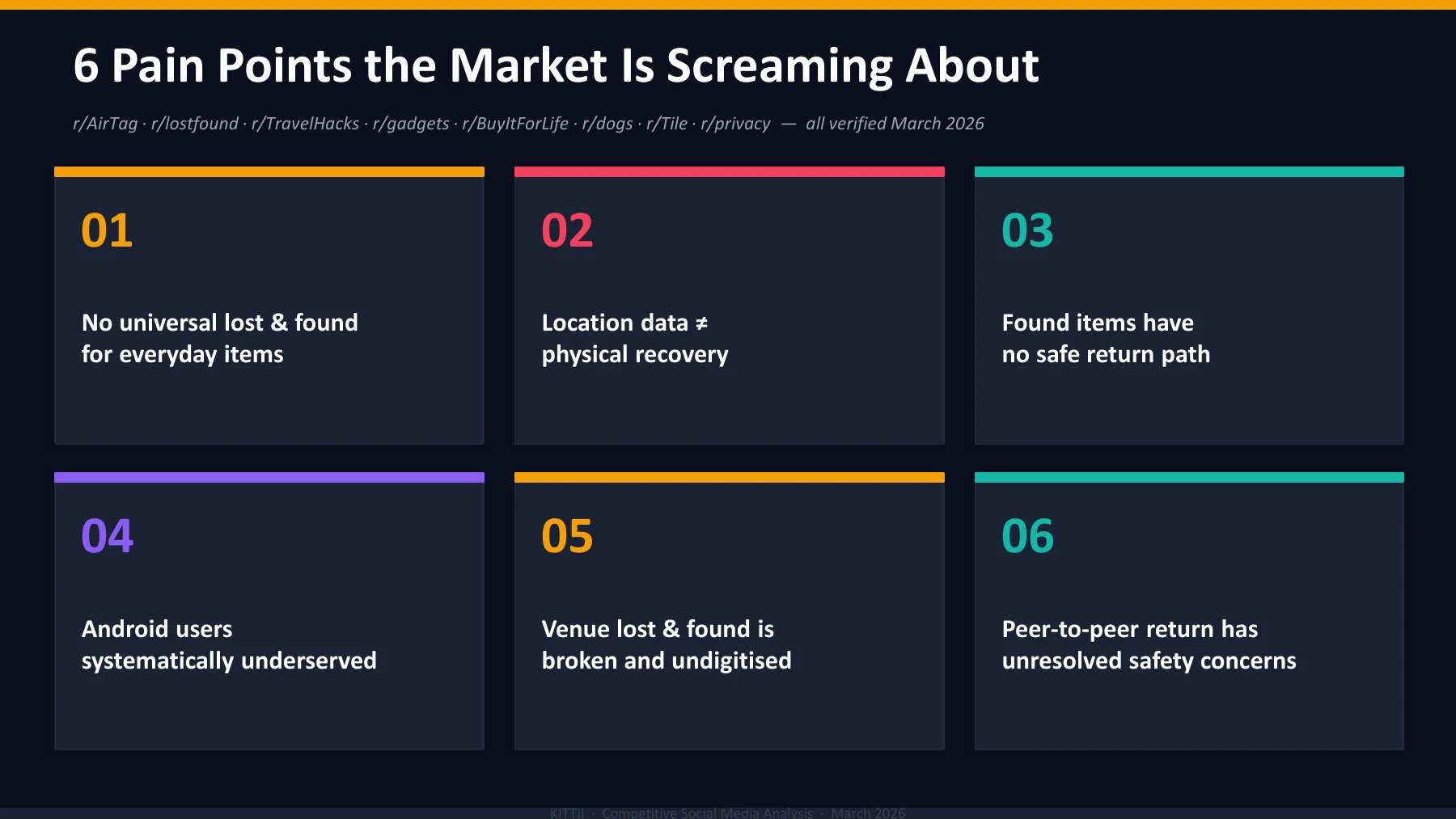
The platform is built for Seekers, but it only works because of Sherlocks.
A marketplace with two sides has a chicken-and-egg problem from day one. You cannot attract Seekers without Sherlocks reporting found items, and Sherlocks will not join a platform nobody has heard of.
Every lost-and-found platform I looked at failed on the same thing: too few people reporting what they had found.
The database stayed empty and Seekers left disappointed.
Finders cited doubts about legitimacy (24%) and not wanting to reveal their identity (24%) as top reasons for not using an app.
People who lose something need help inside a narrow panic window. Miss it and they have already given up.
So we flipped the model. Lead with Sherlocks, make reporting fast, verified and anonymous by default, and let that supply base pull Seekers in.
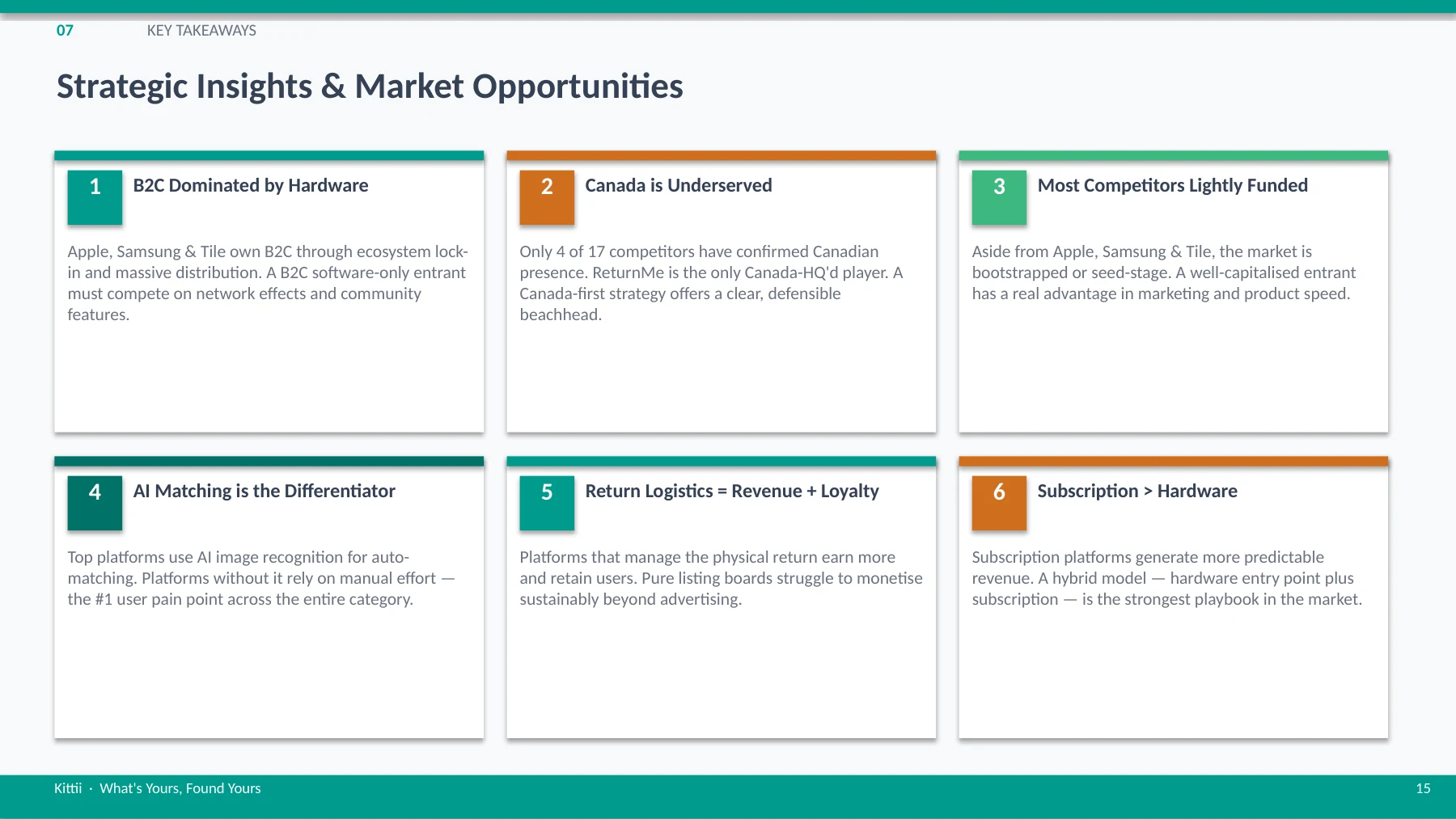
Competitor insights
We ran discovery before committing to a build, rather than treating the idea as validated because it sounded good.
People lose things, and the recovery path is informal and slow.
Almost every established platform was American and sold to institutions: airports, transit authorities, venues.
They catalogue what an organisation has found. None started from the person who lost the item.
None built a community of finders on the other side, which is the gap Kittii was designed around.
User survey validation
We surveyed 54 people, mostly working professionals aged 25 to 34 in Calgary, Halifax and Toronto.
of lost items were worth $100 to $500, and 40% were electronics. Stress averaged 3.2 out of 5.
said a single dedicated platform is necessary.
Most people retraced their steps (41%) or called the venue (28%). 16% did nothing at all.
Too much effort and cluttered, hard-to-search listings tied as the biggest annoyance at 21% each. 47% spent an hour or more looking.
Primary user survey, 54 respondents. Multi-select figures are shares of responses. Read the report ↗
Business model Untested
A hybrid B2B2C model: transactions up front, with SaaS underneath. Financial projections and pricing tiers designed for pre-seed monetization.
B2C pricing
Platform fees scale with item value, capturing maximum willingness to pay at the moment of reunion.
Tier 1
$6.99
Keys, clothing, bags, small accessories
Auto-coordinated returns
Up to 4 days for claim processing
Tier 2
$12.99
Wallets, headphones, sunglasses, small electronics, IDs, pets
Priority matching
Up to 3 days for claim processing
Tier 3
$21.99
Phones, laptops, tablets, cameras
Priority + Safe-Zone handoffs
Up to 2 days for claim processing
Tier 4
$29.99
Jewelry, luxury goods, passports
Full KYC + Chain of Custody
Up to 2 days for claim processing
Priority processing is available for a charge. It reduces the window to 48 hours for Tiers 1 and 2, and 24 hours for Tiers 3 and 4.
B2B SaaS revenue
$99/month
Up to 200 reports
49¢ per report
$199/month
Up to 500 reports
39¢ per report
$580/month
Up to 2,000 reports
29¢ per report
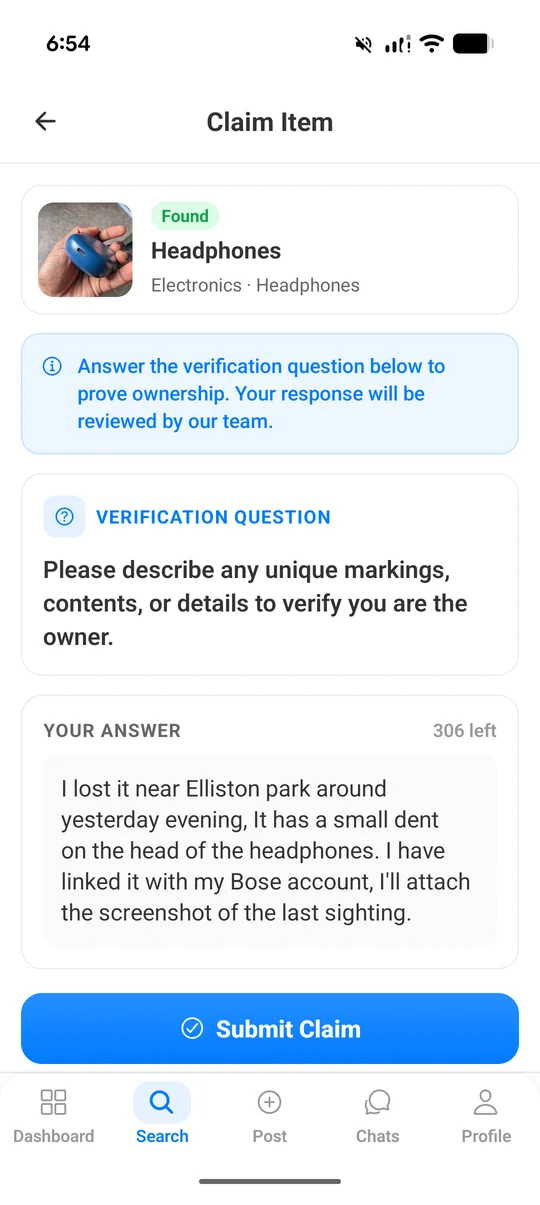
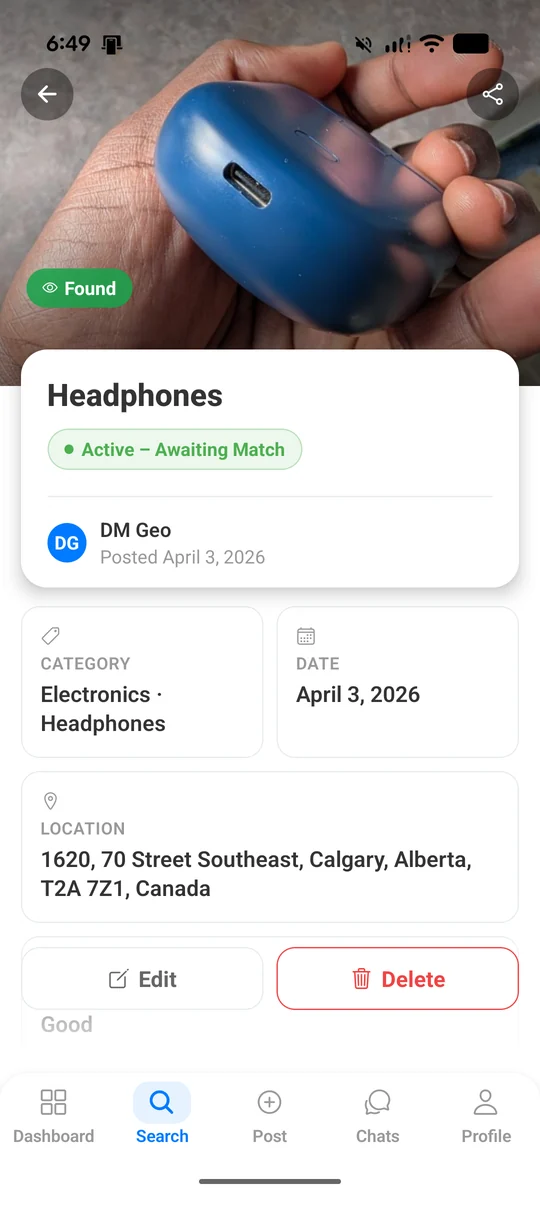
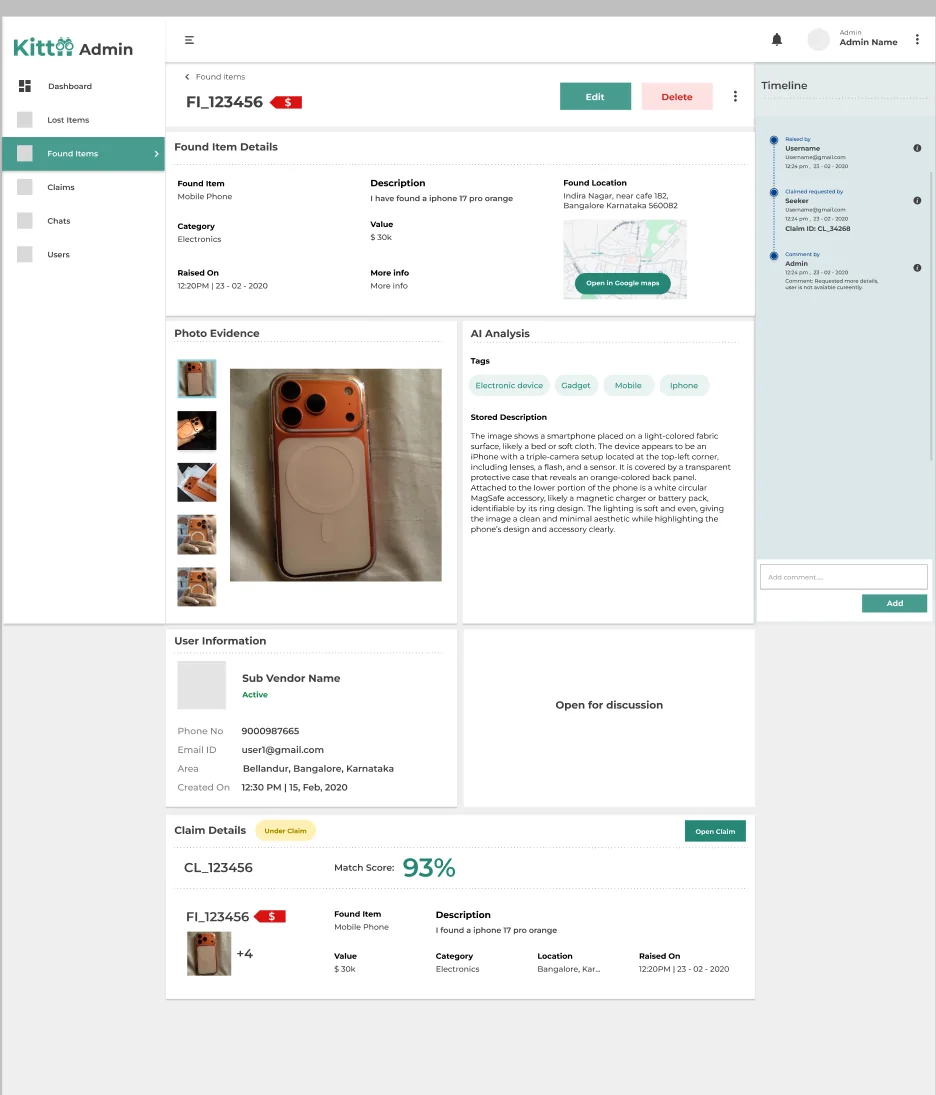
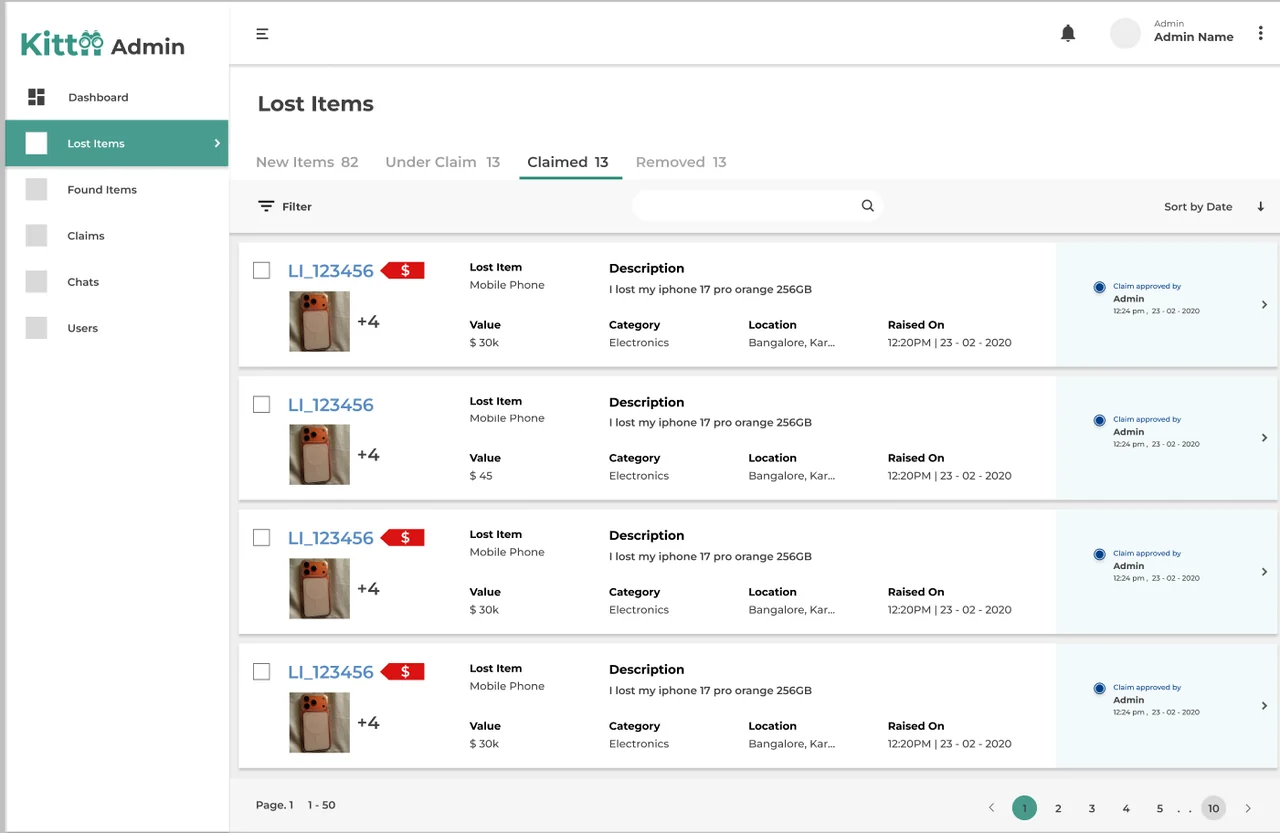
The MVP successfully reached high-fidelity build completion, delivering a dual-sided consumer app for Seekers and Sherlocks, backed by a secure human-in-the-loop admin console to manually verify ownership claims before any item handover.
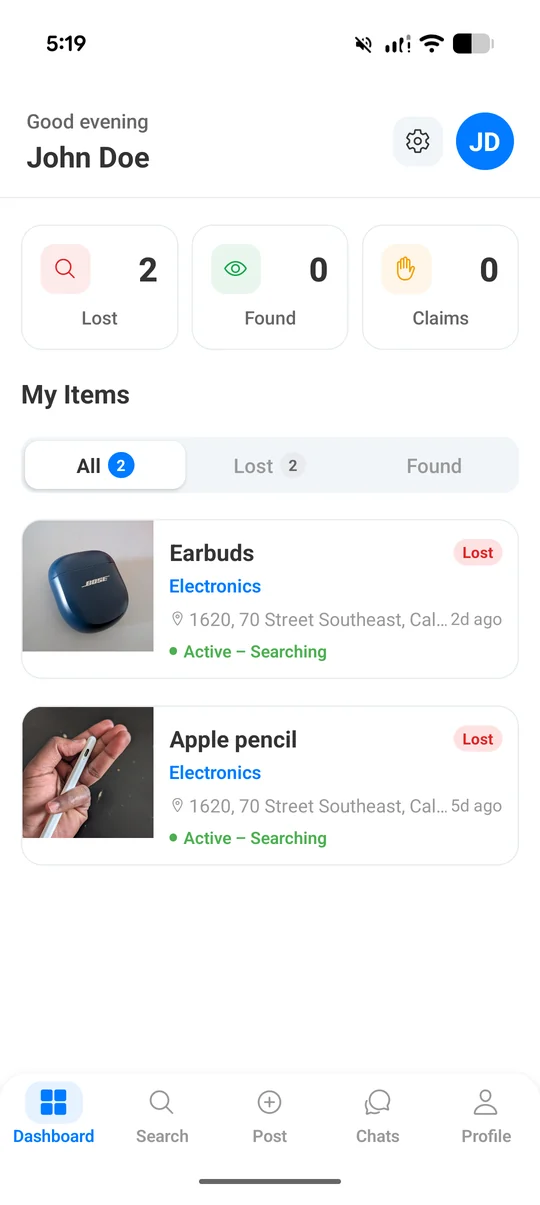
In the app
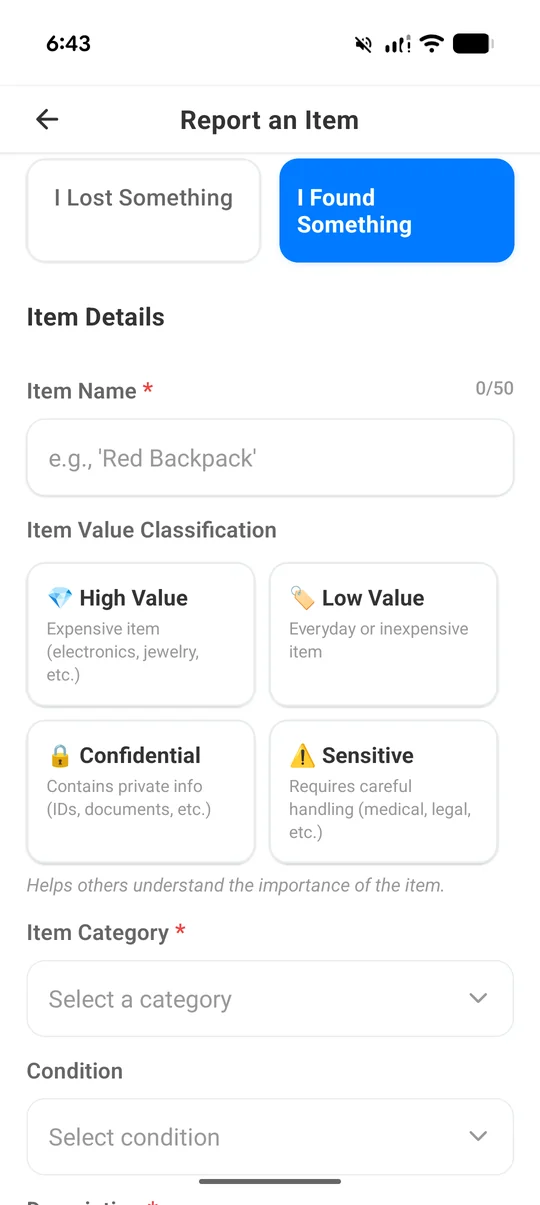
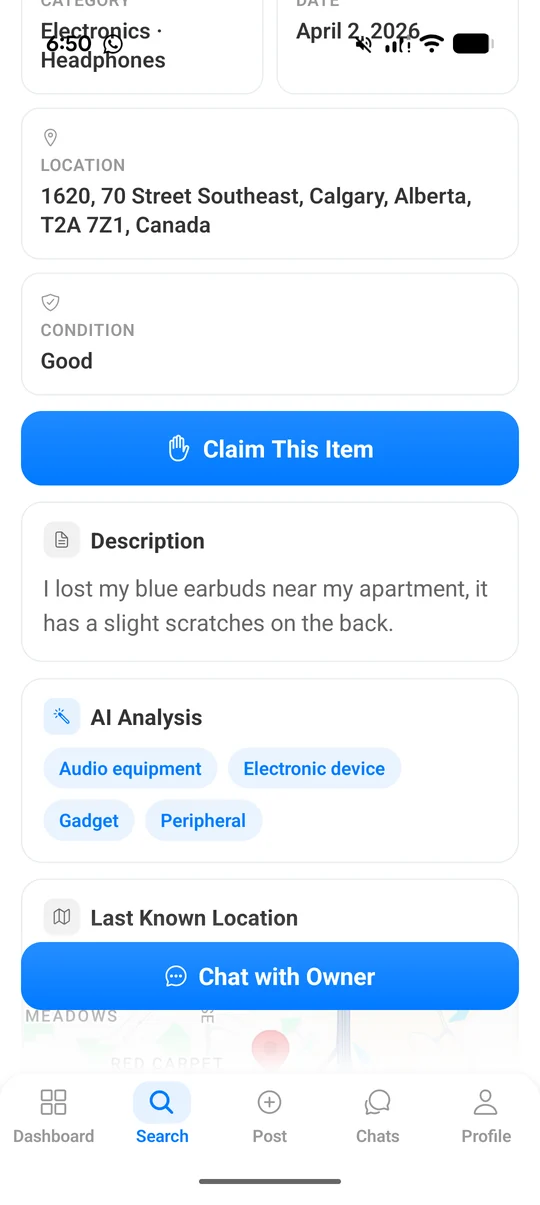
The admin console
A Seeker reports what they lost, a Sherlock reports what they found, and AI matches them by match relevancy.
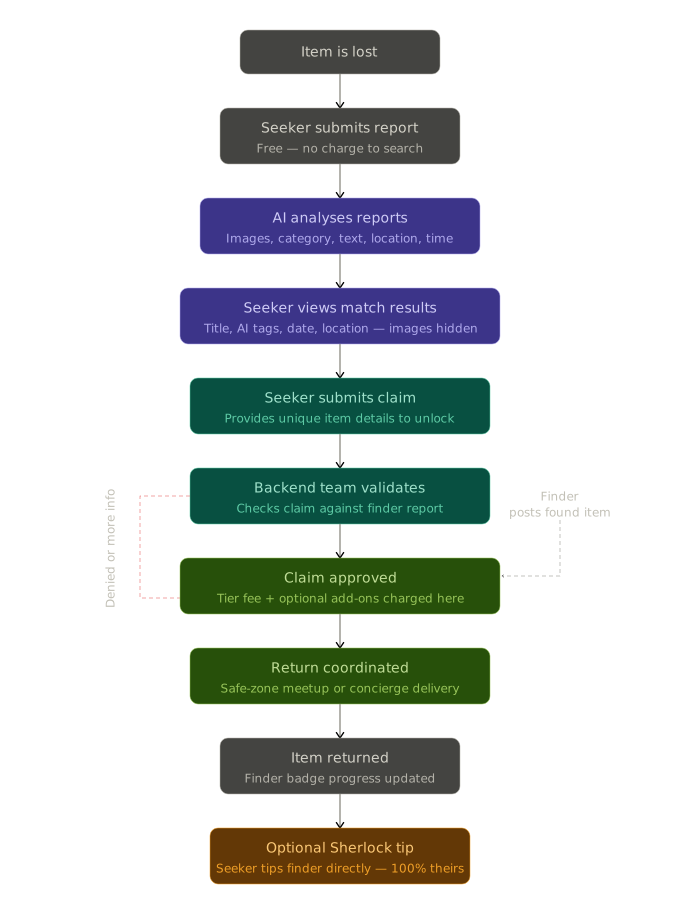
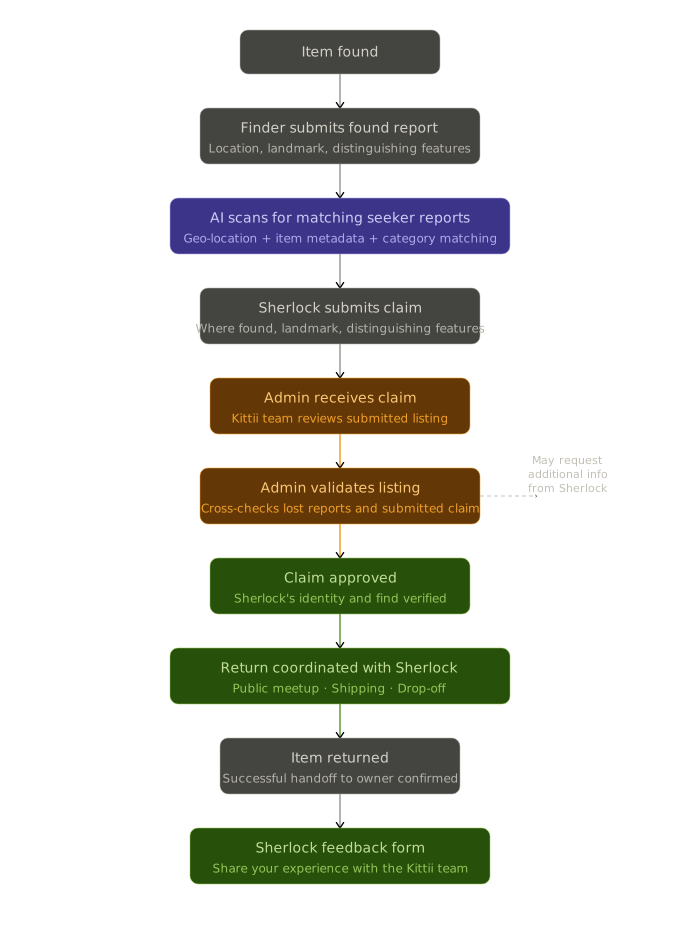
One question shaped the whole plan: how do we get 100 or more people to actively report found items, in five days, in one city, for almost nothing?
How it worked
It turned ten business owners into acquisition channels for $50 each. No sales team, no cold outreach, and the shop's own foot traffic doing the distribution.
Traction
Validated problem
Primary user survey, 54 respondents. Read the report ↗
Product and planned rollout
Live prototypekittii.ca ↗About 30 users from a closed circle
A closed event for up to 250 people
Raw whiteboard sessions mapping pre-launch acquisition, influencer triggers, and the 200-user growth target.
| Metric | Target |
|---|---|
| Total submissions | 200 to 250 |
| Submissions per side | 100 each |
| Recovery rate | 30% |
| Instagram followers | 500 |
The beta was capped at 200 to 250 submissions. A deliberate, controlled cohort rather than a push for scale.
Each number was set so the beta would give a clear yes or no, rather than numbers that merely looked encouraging. A 30 per cent recovery rate is the one that matters, because it is the only measure of whether the product delivers end-to-end value.
This plan was never executed. The team wound down before launch, so the campaign never ran and none of these targets were tested.
Two things I would change, both visible only in hindsight.
Where it stands. The build reached MVP and stopped there. The go-to-market plan was written but never run, and the revenue target was never tested. The product site stays up as a preview, though the product itself never launched.
Four projects: Lumi Cards, Side Quest, HelloFresh and Kittii.